
Docs
How the rat works, what the platform is built on, and how your data is handled.
What PromptRat is
PromptRat is one AI agent for Solana memecoins, running in the browser. Paste any token and get a single verdict in seconds - backed by live market data, on-chain checks, a real DexScreener chart, safety scoring, portfolio tracking and custom alerts. Free, no login, no KYC.
Data integrity
PromptRat separates live facts from agent interpretation. A verdict is tied to the market snapshot used to create it, and a pick must match a real token from that snapshot before the result is shown.
Bound to a snapshot
Price, market cap, volume, liquidity and timeframe changes come from the same captured market dataset. Agents are told to omit unavailable metrics instead of guessing.
Verification you can run
The server resolves the selected symbol, name or mint against the supplied list. An unresolvable pick is rejected rather than attached to another coin.
Freshness in plain sight
Trending exposes the Jupiter source, snapshot timestamp and data age where available. Cached data is reused to reduce provider load without pretending it is newer than it is.
Screening only, never trading
The Rat Verdict is a deterministic screening layer, not an autonomous trading bot. It never submits orders and never guarantees an outcome.
How it works
Open the chat
Ten personalities, ten lenses on the market - from degen to risk manager.
10 personalitiesAttach a coin
A Solana token address (Pump.fun links work too). That's all you need.
Auto live dataRead the verdict
Analysis, chart, safety score, on-chain audit and a one-click swap.
Instant answerHow the rat is trained
Every agent is a specialised AI persona. None of them are generic chatbots - each one is built, briefed and drilled before it ever talks to you. Here is exactly how that works.
1 · The persona brief
Each agent starts as a detailed character document: a backstory, a personality, a clear risk appetite, an analysis specialty and the exact framework it uses to break down a coin. Max sees momentum and hype, RAT reads liquidity and on-chain health, RAT hunts red flags, RAT follows smart money. The same market, ten different lenses.
2 · Grounded in live data
An agent never works from memory or guesses. At analysis time we assemble a live dossier for the coin - current price, market cap, liquidity, 24h volume, holder counts, buy/sell pressure, social links, creation time and trading history - and feed it to the agent. Every verdict is reasoned over real numbers as they are right now, not stale vibes.
3 · Communication training
Every reply is held to the same strict writing standards: fluent, complete sentences; short, punchy rhythm; zero filler words; no trailing ellipses; no stalling; no meta-commentary. Agents answer like a confident trader typing fast on a phone - decisive and complete, every single time.
4 · Guardrails
Every agent is explicitly instructed that it is not a financial advisor. No guarantees, no promises, no "guaranteed 100x" nonsense - every call is framed as high-risk research and entertainment, never as an instruction. The output is research, not advice.
5 · Deep dive
When you ask for a deep dive, the agent takes the whole dossier - price action, holders, on-chain risk, momentum and the narrative - and returns one structured read: snapshot, tape read, flags, plan with exact levels, and a single verdict. One voice, no hand-offs, nothing you have to reconcile yourself.
6 · Privacy by design
The agent does not learn from your chats and nothing you paste is used to retrain anything. Each read is generated on demand from the live dossier and then discarded. Your conversations stay yours.
Meet the agent behind every read on this site.
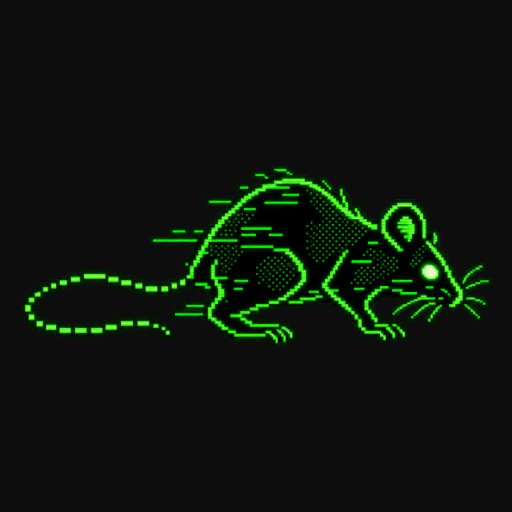
The rat on the chart
RAT is the rat's tiniest member and the only one who lives on your charts. Click the pill button on any live chart to wake him up - he watches the tape in real time and calls it as it moves.
Reads the candles
Reads the 1m and 5m together - green stacks, buyer pressure, momentum. One red candle is noise; he only flips on a real reversal.
Speaks only after the data
Small dips don't scare him - he treats them as buy-the-dip entries inside a green trend. He weighs volume vs liquidity vs momentum before calling anything.
Never invents a number
Only repeats numbers that are actually in the snapshot. No invented ages, volumes or targets - if he doesn't know it, he stays silent.
Free and always on
RAT runs on free AI tiers and reacts live to every meaningful move - no budget burn, no setup. He's just there, watching.
What it does
Live chart + minimize
Embedded real-time DexScreener chart on every coin. Minimize it to a floating widget in the corner and expand it back any time - no reload.
Live agent on the chart
The rat sits on every live chart and watches the tape in real time - reads 1m/5m candles, buyer pressure and momentum, calls buys and sells as the chart moves and stays quiet on noise. Free, always watching.
Rat Verdict
The agent screens trending coins inside a market-cap range you set (min + max) and picks the one it would buy right now. Share it on X or download a ready-made image card.
Live Callouts
DexScreener trending plus fresh launches from pump.fun, OTC Desks and stonkfun - one streamed feed you can sort as 'Trending' or 'New launches' and filter to a single source, with one-click buy and analysis. A launchpad is read against its own opening price, so a brand-new curve launch lands in the feed while it is still new instead of hours later.
Safety score
A transparent 0-100 heuristic built from live liquidity, volume, turnover and buy/sell flow.
On-chain audit
Mint authority, LP status, top holders and more - read straight from the Solana chain.
Safety check
Paste any token for a transparent 0-100 safety score. Permissions, liquidity, holder distribution and trading quality are separated into explicit PASS/WARN/FAIL checks, with a live-data receipt. Dedicated page at /safety.
Wallet tracker
Follow whale wallets and get notified the moment they open something new - tracked wallets are polled every minute and new holdings land in a live feed.
Deep dive
One request, the whole coin: momentum, holders, on-chain risk, levels and a single decisive verdict.
Custom alerts
Per-coin ±% alerts over 5m/15m/30m/1h/6h/24h that follow you to every page as toasts + browser notifications.
Portfolio analyzer
Paste any Solana wallet, see your bags, value, 24h moves and top movers - one click to watchlist. Practice risk-free with Paper Trading and plan entries with the Position Calculator.
Paper trading
Practice without risk - log a hypothetical buy (token + $ size + optional entry), watch the live PnL tick every 15s, then sell to bank a realized result. All in your browser.
Track record
Every call the rat makes is written to an append-only ledger with an explicit baseline, target and invalidation level, then scored at 1h/6h/24h against live Jupiter prices. Persisted server-side and reconciled against the market instead of being restated later.
Operations monitor
Privacy-safe aggregate diagnostics at /monitor: route requests, provider errors, cache efficiency, stale snapshots and latency samples. Metrics are intentionally ephemeral per warm serverless instance.
Public record
Snapshot-bound audit links make a Rat Verdict reproducible without rerunning AI. The public record reports only calls written to the server-side ledger, and never fabricates a historical score.
Market grid
The liquid end of the Solana memecoin market as a dense live board - tile size tracks market cap, tint tracks the 24h move, and hovering inspects a coin without leaving the grid. Click any tile to open its chart.
Watchlist
Track coins with live prices, liquidity and volume, sorted by biggest movers.
Trending table
200+ Solana coins from Jupiter's live data - age, price, 5m/1h/6h/24h moves, volume, net flow, liquidity and market cap. Sortable and mobile-friendly, plus a pro screener: filter by min liquidity/volume, max age, 5m/24h momentum and a market-cap range, with multi-column sorting (Shift+click a column to stack a second sort). Narrow filters auto-expand the pool with DexScreener trending + fresh pump.fun launches so you always get ~100 candidates.
Curve radar
Every coin still on the pump.fun bonding curve, ranked by how close it is to graduating. The bar is the SOL actually raised into the curve - a curve fills at 85.005 SOL - so a coin at 92% is a coin that is about to graduate. Each row also carries the dev's track record (how many coins that wallet launched and how many graduated) and pump.fun's own bundle / sniper / dev-holding flags for the top holders. Not a guess and not a scrape: the numbers come straight from pump.fun's public API. Dedicated page at /curve.
Buy and sell
In-app swaps powered by Jupiter - self-custody, your wallet and keys never touch our servers.
Every page
Everything lives on one fast site - here is what each page does.
Trending →
200 Solana coins streamed from Jupiter's live data - a sortable pro terminal with age, moves, net flow, liquidity and market cap, plus the Rat Verdict panel.
Curve radar →
The pump.fun bonding-curve board: 'About to graduate' ranks the coins closest to filling their curve, 'Just launched' shows the newest mints, and every row carries curve progress from the real SOL reserves, the dev's record (coins launched / graduated) and the bundle, sniper and dev-holding read from the top holders.
Live radar →
The full radar as its own page: 33 readers (X trending lists from twenty countries, Google Trends in three, Know Your Meme, four rotating Reddit meme feeds, China's Baidu board, Wikipedia's biggest readership spikes, pump.fun's new coins and DexScreener's paid boosts) rescanned every 45 seconds on the server, so the board is always warm and always seconds old. Every narrative carries its meme score, the places it climbed since the last scan, whether it is new to the board, and an explicit coin-gap answer ('No coin yet' / 'Barely coined' / 'Already coined') from a live DexScreener search. Filters by category, by reader and by 'no coin yet', sorting by score, by climb or by newest, and a first-mover alert mode that pings you the moment a brand-new meme shows up with no coin on it. One click hands the narrative to the launch desk with the draft already filled in.
Live Callouts →
DexScreener trending plus fresh launches from pump.fun, OTC Desks and stonkfun streamed in real time - sort as 'Trending' or 'New launches' and filter to any source, with one-click buy and analysis. Every row carries its real launch age, and new pairs are timestamped from the pool's own creation time.
Watchlist →
Track any coins with live prices and per-coin ±% alerts across 5m/15m/30m/1h/6h/24h that fire as toasts + browser notifications. Also home to the Wallet Tracker - follow whale wallets and get notified on new buys.
Safety check →
Paste any Solana token for a transparent 0-100 safety score. Review separate permissions, liquidity, holder distribution, trading quality and integrity checks, backed by a live-data receipt and on-chain audit.
Portfolio analyzer →
Paste any Solana wallet - see the bags, value, 24h moves and liquidity, send the whole lot to the watchlist in one click, and practice risk-free with paper trading.
Track record →
Every recorded rat call with its baseline, target, invalidation and 1h/6h/24h paper checkpoints, persisted server-side and reconciled live against Jupiter. Read it as a ledger, not a promise.
Market grid →
A dense live board of the liquid Solana memecoin market: tile size by market cap, tint by the 24h move, hover to inspect a coin and one click to open its chart.
Coin page →
Every coin has its own page: live price and market cap, liquidity, buy/sell flow, a safety score, the chart and one AI read on demand. Open it from any table, tile or callout.
Chat →
Attach any coin and ask the agent anything: analysis, chart, safety score, on-chain audit, a deep dive on demand and a one-click Jupiter swap.
Operations monitor →
Privacy-safe aggregate health metrics for request volume, provider errors, cache behavior, stale snapshots and latency.
Token transparency →
The $PromptRat mint account decoded byte by byte in your browser: base Mint state, the Token-2022 TLV extension table with real byte offsets, the metadata stored inside the mint, the transfer-fee config, a field-level cross-check against the validator's own parsed view, an upstream holder audit and the holder distribution computed on the spot from the token accounts themselves - how many accounts exist, how many are empty, top-1/5/10/20 concentration, and which token account is the live liquidity vault. Paste any other mint to inspect it with the same decoder.
Buy / Execution Ladder →
A Solana Action landing page with a real execution ladder: one independent live Jupiter quote per SOL size (0.05-5 SOL) so you can see the slippage before signing, plus priority-fee percentiles sampled by RPC for the accounts your order actually writes.
Launch desk →
"What is moving": a memecoin radar, not a news feed. It reads X's trending lists (four regions, hour by hour), Google Trends in three countries, Know Your Meme's newsfeed and new-entry list, a rotating meme subreddit, viral-animal and viral-meme press queries, pump.fun's live board and DexScreener's paid boosts - all server-side and keyless - then scores every narrative by how meme-shaped it is (animals, brainrot, viral people, jokes), how fresh it is and, above all, whether a coin already exists: the top of the board gets a live DexScreener search and each row is tagged 'No coin yet', 'Barely coined' or 'Already coined'. Filters for animals, meme energy, brainrot, people, food, sport and news, a 'no coin yet' switch, search and a one-minute auto-rescan. Cards carry the trend's own picture (pulled from the source page when the feed has none), so the board is something you can pick from by eye. Pick a narrative and the draft fills itself in: a name chosen from three options, a 3-8 character ticker built from the meme's core word, and three written descriptions - each one naming the trend, the signal it came from and the source, and cycling between them is instant. The token art comes from the trend's picture, from a file you upload (or drop on the tile) or from the brand rat with the ticker burned in. The launch options are the pump.fun ones: name, ticker, description, image, X/Telegram/website, a dev buy in SOL (with presets), the creator-fee split - off by default, one wallet or up to ten with percentages - the fixed facts (1B supply, 6 decimals, Token-2022, revoked authorities) and a step-by-step checklist. The art and text are pinned to pump.fun's own metadata endpoint, which stores them on IPFS, and the whole thing copies out as one pasteable brief. There are three ways to finish: **Launch here** builds the real create transaction on pump.fun's own program and has your wallet sign it - after the exact transaction has been simulated against mainnet, so a launch that would fail never reaches your wallet; the **manual** route opens pump.fun/create in a new tab with every field ready to paste; and the **code/bot** route hands you the IPFS metadata URI for a script. A creator-fee split rides along as a second, tiny transaction immediately after the coin goes live. Under the draft sits the **pre-flight grade**: a live checklist that scores the draft out of 100 and names what to fix first - ticker and name collisions checked against real Solana pairs on DexScreener, copy length and honeypot wording, hashtag count, whether the art is the trend's own picture, the size of the dev buy, a fee split that has to add up, the X link, and how fresh the trend still is - because the cheapest moment to fix a launch is before the wallet signs. The desk also writes the **raid pack** - the X post, three replies, a quote-tweet angle and a Telegram blurb for that exact coin - because a coin with no words around it dies in its first hour. PromptRat never signs, never spends and never touches a key.
API Reference →
The free, keyless public API - every agent as a JSON card, a capability manifest, an interactive playground to try it live, live Solana mainnet telemetry (slot, TPS, client diversity), the byte-level mint decoder and the Solana Action (Blink) that buys $PromptRat from anywhere.
Under the hood
Next.js 15 + React 18
App Router, server + client components, one fast deployable web app.
Jupiter Data API
Primary market data source - 200 trending coins across every category (top trending + top traded 1h/6h/24h) with fresh price, volume, net flow, liquidity, market cap and listed time.
pump.fun API
Fresh-launch source for the callouts - polls pump.fun's own new-coin list via a dedicated cached endpoint and feeds fresh launches into the aggregated callouts feed.
OTC Desks + stonkfun
Partner launch feeds for the aggregated callouts - tokenized-stock desks from otcdesks.cash and stub-stock launches from stonkfun.xyz, merged in with DexScreener trending and pump.fun, each tagged by source. Launchpad coins are judged against the launchpad's own opening price (stonkfun's curve opens around $2.7K) so fresh launches surface while they are new, but nothing under a $4.5K market cap is ever listed in either view; a curve market is only called once real trading shows, so a lone creator moving his own coin stays out.
DexScreener API
Official free public REST API (no key) - live pairs, liquidity, volume, token metadata, the chart embeds, the paid-boost lists the launch radar reads to see where the money is being spent, and the per-narrative search that answers the question every launcher asks first: has somebody already made this coin? (see the coin-gap tag on /launch).
X trends, Google Trends + meme feeds
The 'What is moving' radar on /launch reads X's hourly trending lists for four regions, Google Trends' daily search trends (with the trend picture) for three countries, Know Your Meme's newsfeed and new-entry feed, a rotating meme subreddit and viral-animal / viral-meme press queries - all public, all keyless, all parsed server-side, so no third-party script or key ever reaches the browser.
GeckoTerminal API
Pool and market data - used as a secondary source, for on-demand lookups and for the $PromptRat trade tape: the pool is resolved through DexScreener, then every swap is read raw from the pool and normalised per trade (tx hash, side, price, wallet), with each row linking straight to Solscan.
Solana RPC
On-chain reads for portfolio balances, token accounts and audits, plus the live network telemetry on the API Reference page - head slot, epoch progress, TPS split into vote/non-vote using a sampled block, slot time, validator counts, activated stake, Nakamoto coefficient and stake-weighted client diversity (Agave vs Firedancer), all read from getEpochInfo / getRecentPerformanceSamples / getVoteAccounts / getClusterNodes / getBlock. The same RPC delivers the raw mint bytes decoded on /token, the account-scoped getRecentPrioritizationFees percentiles shown on /buy, and the holder distribution on /token, which is enumerated from the token accounts themselves (getProgramAccounts filtered by the mint at byte 0, then batched getMultipleAccounts) because every public node refuses the indexed holder call.
Token-2022 byte decoder
The centrepiece on /token: the mint account is fetched as raw base64 and parsed here, byte by byte - the 82-byte base Mint state, the account-type discriminator, the reserved gap and the TLV extension table (MetadataPointer, TokenMetadata, TransferFeeConfig, and the zero-length flags) with every offset and length reported as it really is. Each decoded value is then compared field by field against the validator's own jsonParsed view, so the page proves its own decoder instead of asking you to trust it.
Jupiter Swap API
The execution ladder on /buy is not a curve drawn from spot: each rung is a separate live swap/v1/quote for that exact SOL size, against the real pools, returning its own route, price impact, minimum received and context slot. Unroutable sizes are reported as unavailable rather than interpolated.
Solana Actions & Blinks
A spec-compliant action at /api/actions/buy with the matching /actions.json rules file and a human landing page at /buy: the server builds the Jupiter route and an unsigned transaction for the caller's wallet, then simulates it on mainnet before returning it, so $PromptRat can be bought from any wallet, bot or Blink-aware feed. No keys are ever held or accepted.
Helius RPC
Faster Solana RPC plus on-chain token metadata (names, symbols, logos) so portfolio wallets render properly.
Jupiter Terminal
In-browser swaps - the official widget, fully self-custody.
PWA
Service worker + manifest - installable like a native app on phone and desktop.
All market data comes from free public APIs - no account or API key needed from you. The whole app is a single Next.js build, served fast from a global CDN.
Privacy & security
- Self-custody swaps. Buying and selling runs entirely in your browser via Jupiter - your keys never touch our servers.
- Local-only state. Your watchlist, alerts and last wallet live in your browser's local storage, not on any server.
- Public data only. We read public on-chain data and public market APIs. We never see your seed phrase or private keys.
- Rate limited. Public endpoints are protected with rate limits so the service stays fast and fair for everyone.
Public API
The rat is also a machine-readable API - no signup, no key, no wallet. Hit the endpoints from your terminal or your own bot to discover an agent by what it does, or pull one agent's card.
Prefer to poke around? Open the interactive API reference →
# discover the API (index of every endpoint)
curl https://promptrat.fun/api

# every agent as a JSON card
curl https://promptrat.fun/api/agents

# filter the rat by capability (e.g. rug checks) and paginate
curl "https://promptrat.fun/api/agents?capability=rug&limit=5&offset=0"

# what can the rat do? (capability keyspace with agent counts)
curl https://promptrat.fun/api/capabilities

# one agent's card
curl https://promptrat.fun/api/agents/max

# what can one agent do? (capability manifest)
curl https://promptrat.fun/api/agents/max/capabilities

# JSON Schema of an agent card
curl https://promptrat.fun/api/agents/schema
Every response uses the same envelope: data holds the payload, meta holds the version, timestamps, counts and the rate limit. Errors are uniform too - { error: { code, message } }.
{
  "data": [ { "id": "rat", "name": "RAT", "role": "...", "capabilities": ["rug"] } ],
  "meta": {
    "version": "1.0",
    "generated_at": "2026-09-07T00:00:00.000Z",
    "rate_limit": { "limit": 10, "window_seconds": 60 },
    "count": 1, "total": 1, "offset": 0, "limit": 1, "capability": "rug"
  }
}
The site sits behind Cloudflare's managed challenge, so browser requests (including the Discover page) work out of the box, while plain curl from a script gets 403. To let external tools / bots call the API, add a Cloudflare WAF rule that skips the challenge for the read-only paths you want public (e.g. /api/agents*), and keep it on cost-heavy ones like /api/chat. Every endpoint here is rate-limited to 10 requests / minute per IP and served with CORS enabled.
- GET /api - API index; lists every endpoint so tools can self-discover.
- GET /api/agents - the agent, with its capabilities and labels.
- GET /api/agents?capability=rug - filter the agent by what it is good at (rug, chart, whales, hype, news, sentiment, risk...).
- GET /api/agents?limit=&offset= - paginate a filtered list.
- GET /api/agents/:id - a single agent's card, e.g. max.
- GET /api/agents/:id/capabilities - one agent's capability manifest.
- GET /api/capabilities - the capability keyspace with per-capability agent counts.
- GET /api/agents/schema - JSON Schema of an agent card for validation.
- GET /api/chain-health - live Solana mainnet telemetry (slot, epoch, TPS split, slot time, validators, stake, Nakamoto coefficient, client diversity).
- GET /api/token-contract - the mint account decoded byte by byte: base Mint state, Token-2022 extensions with real offsets, metadata inside the mint, transfer-fee config, a field-level cross-check against the validator's parsed view, the upstream holder audit and the full holder distribution computed from the token accounts themselves (holders, empty ATAs, top-1/5/10/20 concentration, liquidity vaults labelled from the live route). Add
?mint=to inspect any other Token-2022 mint. - GET /api/buy-quotes - one independent live Jupiter quote per SOL size in the execution ladder, plus priority-fee percentiles sampled for the accounts that order writes. Add
?amount=0.5to highlight a rung. - GET /api/mint-ledger - a mint's life read straight off the chain: the reference history is walked back to the oldest transaction the deepest RPC node still holds, and that transaction is decoded in execution order. If it is the creation transaction the answer is certified and carries the launch record (timestamp, creator, initial supply, metadata, revoked authorities, the opening buy and the SOL that went into the curve) plus lifetime activity - transaction count, failure rate, first and last activity and a per-UTC-day histogram. If a node's index stops short, the response says so and withholds the launch fields rather than guessing. A certified creation can never change, so it is also kept server-side and re-served as
genesis.fromStore(withgenesis.certifiedAt) when the nodes will not return that transaction again - the activity block stays exactly as short as the live walk found it. - GET /api/coin-stats - the canonical per-mint snapshot with provenance:
?mint=for one coin,?mints=a,b,cfor a batch. - GET /api/live-prices - batch live prices for
?mints=a,b,cin one round trip. - GET /api/candles - OHLCV candles for a mint or a pool, served from indexed pools with the on-chain swap walk as the fallback for coins too new to be indexed.
- GET /api/coin / GET /api/pair - resolve a mint, a pump.fun link or a pool address into one coin record, or into the most liquid pair and its image.
- GET /api/call-ledger - the agent's public call ledger: every posted call with the price at post time, settled against live prices.
- GET /api/x402/rat-report - the rat report sold over HTTP 402: unpaid it answers 402 with the price and receiving wallet, paid it re-reads your Solana settlement and returns the artifact. See /x402.
- GET /api/x402/verify - the free settlement verifier behind that paywall: ?signature= or ?sample=1, judged against the chain.
- GET|POST /api/x402/holder-pass - the free tier: holders of 150,000+ $PromptRat sign a one-off challenge message to prove ownership of a wallet and receive the same report. The ed25519 signature is verified server-side and the balance is read live from the chain.
- The rest of the surface (trending and callout feeds, the trade tape, chain health, the Blink) is listed machine-readably in
GET /api, with the parameters each endpoint accepts.
# Node.js (no deps)
const agents = await fetch("https://promptrat.fun/api/agents").then(r => r.json());
console.log(agents.data.map(a => a.name));

# Python (no deps)
import json, urllib.request
with urllib.request.urlopen("https://promptrat.fun/api/capabilities") as r:
    print(json.load(r)["data"])
Machine-payable report (x402)
One endpoint on this site is not free: GET /api/x402/rat-report sells a structured report about $PromptRat and returns, without a key, for a Solana transfer. The rail is the HTTP 402 status code plus the x402 protocol v2 conventions - the same shape an autonomous agent can follow with no account, no signup and no human.
- Unpaid:
402with thePaymentRequiredobject base64-encoded in thePAYMENT-REQUIREDresponse header - theacceptsarray (0.005 SOL by default), the receiving wallet, the resource id and the artifact's field inventory. The same object is echoed in the JSON body. - Paid: retry the same request with
PAYMENT-SIGNATURE= base64 of{ x402Version, accepted, payload: { signature } }, wheresignatureis a settled Solana mainnet transaction signature. - The server does not trust that claim: it re-reads the transaction with
getTransaction, requires the pre/post lamport balances to show the value arriving at the receiving wallet inside the accept window, then claims the signature in a shared store so one payment buys exactly one report. - Every refusal is a named reason with the numbers measured on chain -
underpaid,payment_expired,pay_to_received_nothing,payment_already_redeemed,transaction_not_readable. A transaction we cannot read is never counted as payment. GET /api/x402/verifyruns the identical verifier for anyone, for free: pass?signature=, or?sample=1to have it discover the newest real inbound transfer to the receiving wallet and judge it against the price.- Holders skip the payment:
GET /api/x402/holder-pass?address=…issues a one-off challenge, the wallet signs it (signMessage, nothing is ever broadcast), andPOSTreturns the same report when the address holds at least the threshold - measured live on chain, not claimed by the client.
# read the price - the whole contract is in one response header
curl -i https://promptrat.fun/api/x402/rat-report

# hand back the settled signature (base64 of the PaymentPayload)
curl -i -H "PAYMENT-SIGNATURE: $PAYLOAD" \
  "https://promptrat.fun/api/x402/rat-report?mint=GxWqJbWPxMseev7WXYNPLEG8K59v2fAhJ5m5o7Yepump"

# check any settlement against the chain, without paying
curl "https://promptrat.fun/api/x402/verify?sample=1"
There is no facilitator and no custody: the price is defined by the server, the transfer is signed by your wallet, and the server only ever reads. The receiving wallet, the price and the holder threshold are deployment settings (PROMPTRAT_X402_PAYTO, PROMPTRAT_X402_SOL_ATOMIC, PROMPTRAT_X402_HOLDER_ATOMIC, PROMPTRAT_X402_MAX_TIMEOUT_SECONDS); with no receiving wallet configured the endpoint answers 503 rather than advertise a payment it cannot honour.
FAQ
Is PromptRat free?
Yes - it's completely free. No account, no login, no KYC.
Do I need a wallet?
Only to Buy/Sell. Everything else (analysis, charts, audits, alerts) works with just a token address.
Do you store my wallet or keys?
No. Swaps run in your browser through Jupiter - your private keys never leave your wallet. Your portfolio/watchlist/alerts live only in your browser's local storage.
How is the agent built?
RAT is a single specialised AI persona - one detailed brief (voice, risk appetite, analysis framework, strict writing rules) fed the coin's live market data at analysis time. Nothing you type is used to retrain anything.
How fresh is the data?
Trending uses a shared Jupiter snapshot with server-side caching and client request de-duplication. The table refreshes Jupiter data every minute and performs a broader refresh every 3 minutes. The Rat Verdict panel screens the same board through the filters you set and locks one call with entry, target and exit. Exact age and snapshot metadata are shown where available.
Where does the Trending list come from?
Trending uses Jupiter's live data API - it merges every trending category (top trending + top traded over 1h/6h/24h) into one 200-coin list with fresh prices, volumes, net flow, liquidity and market caps, sorted by age by default.
Where do the Live Callouts come from?
We aggregate them ourselves - one feed merges DexScreener's official trending lists with fresh launches from pump.fun, OTC Desks (otcdesks.cash) and stonkfun.xyz, each tagged with its source. You can view it as 'Trending' (best-ranked first) or 'New launches' (newest first, coins from the last week only) and filter to a single source. Trending only calls coins above an $8K market cap; the exception is a market still trading on its launchpad's own curve, because that curve opens far below the bar (stonkfun's at around $2.7K), so it is measured against the launchpad's opening value instead. One rule overrides all of it: nothing below a $4.5K market cap is ever listed - not in Trending, not in New launches, from any source - so a launchpad curve only shows up once it has traded up past $4.5K, and a graduated market (and every row in Trending) still has to clear $8K. Every callout also has to show real trading behind it: thin, untraded third-party markets stay out, and a launch that is still trading on its own launchpad curve is judged by that launchpad's live trading instead, because its trades are not visible to DexScreener yet. Volume and liquidity on a card come from the coin's own launchpad where it publishes them, and from DexScreener's deepest pool for that mint otherwise - a coin whose only pool holds a few dollars is shown without a liquidity figure at all rather than with a misleading one, and its 24h volume is always the real traded amount.
Does PromptRat work on mobile?
Yes - the whole app is mobile-first: hamburger menu, collapsible coin stats, a trending table that fits the screen, full-screen panels and installable PWA support.
Is there a PromptRat coin?
Not yet. The PromptRat coin is planned for the future - the first official announcement will come from our official X (Twitter) account. No launch date, ticker or address has been confirmed, so anything you see elsewhere is not official.
How do I follow PromptRat?
Follow @PromptRatSol on X for announcements - that's the only place to hear about new features and the future PromptRat coin.
Do alerts repeat?
No - each alert fires once when its condition is met and only re-arms after the price moves back past the threshold.
Is this financial advice?
No. Everything the rat says is entertainment-grade analysis, not financial advice (NFA).
PromptRat is an entertainment and research tool. Memecoins are extremely volatile and most lose value. Nothing here is a recommendation to buy or sell. Do your own research and never invest more than you can afford to lose.